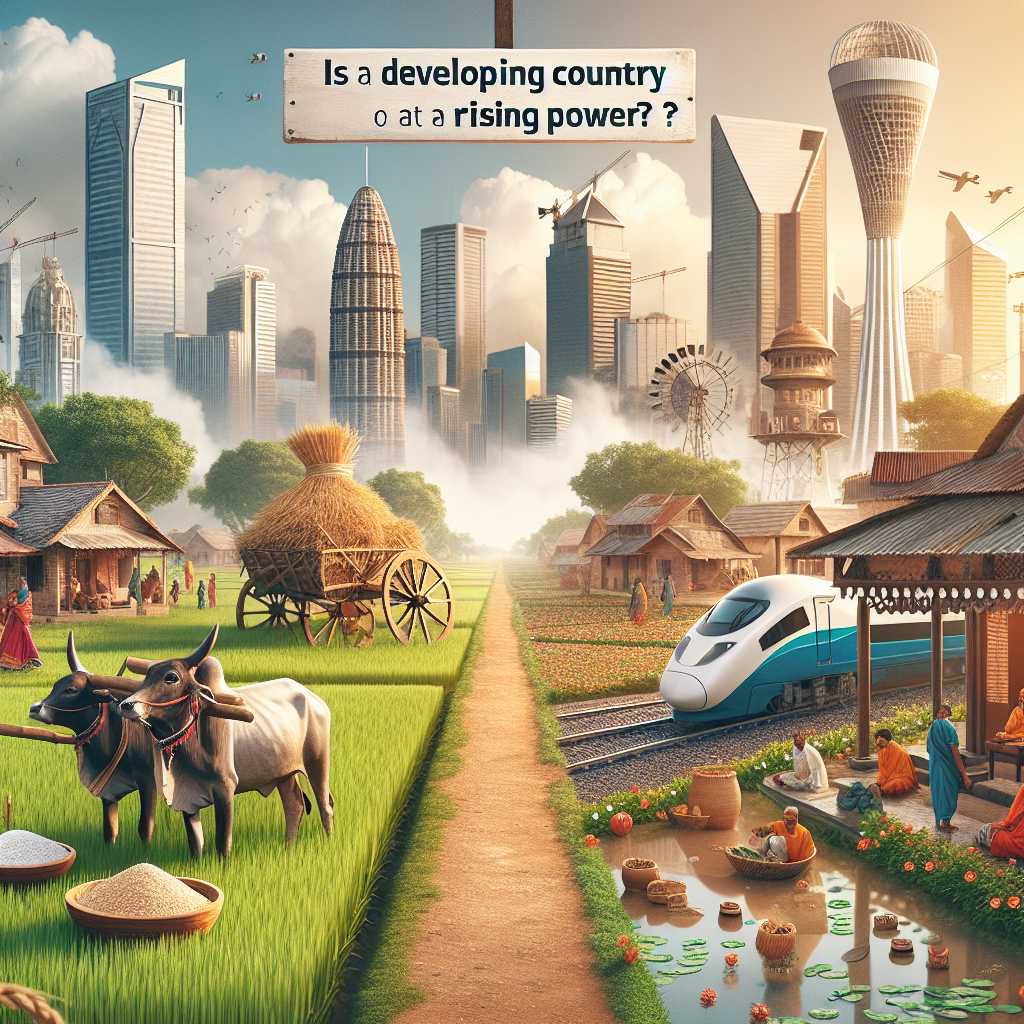
As we stand at the crossroads of global dynamics in the 21st century, India’s position on the world stage evokes both admiration and curiosity. Often hailed as a burgeoning economy with its eyes set on superpower status, India’s journey from its post-colonial past to its present state is nothing short of a complex tapestry woven with opportunities, challenges, and resilience. Is India still a developing country, or is it a rising power poised to influence global affairs in the years to come?
India’s story is unique. With a population exceeding 1.4 billion, it is not just one of the world’s largest democracies, but also a nation marked by diversity in religion, language, and culture. Its economy, which has been growing at a remarkable pace, positions it as one of the fastest-growing major economies in the world. Yet, beneath this promising economic narrative, India grapples with issues like poverty, education, and infrastructure that persistently tether it to the ‘developing country’ label. Which narrative truly defines India today?
Let’s delve into the various facets that simultaneously showcase India’s developmental struggles and its emerging power on the global stage.
Economic Growth and Development Opportunities 🚀
Rapid GDP Growth
Over the past few decades, India has consistently maintained a GDP growth rate that outpaces many of its global counterparts. This strong economic performance has been driven by a robust service sector, manufacturing, and more recently, the rise of digital technology and startups.
Industrial and Technological Advancements
India’s industrial sector is witnessing significant advancements, with major strides in automobile manufacturing, pharmaceuticals, and IT services. The “Make in India” initiative aims to boost domestic manufacturing while attracting foreign investments, propelling India further into the industrial age.
Challenges in Infrastructure
While economic growth is promising, infrastructure development remains a bottleneck. Issues such as inadequate transportation networks, irregular power supply, and urban congestion need to be addressed for sustained economic progress.
Social Progress and Challenges 🌱
Poverty Alleviation Efforts
India has made commendable progress in reducing poverty, with millions lifted out of poverty in recent years. Government initiatives focusing on financial inclusivity and rural development have played a substantial role in this progress.
Education and Skill Development
The education sector has seen significant improvements, with increasing literacy rates and greater access to higher education. However, the quality of education and skill development still need focused reforms to align with global standards.
Healthcare and Public Health Challenges
Access to quality healthcare remains a challenge for many Indians, particularly in rural areas. While strides have been made in public health campaigns, the nation continues to grapple with issues like malnutrition, maternal health, and infectious diseases.
Geopolitical Influence and Aspirations 🌏
International Relations and Diplomacy
India’s strategic geographic location and its active participation in global institutions like the United Nations and G20 underline its rising geopolitical influence. Its diplomatic engagements in Asia, Africa, and beyond signify its role as a pivotal global player.
Defense and Strategic Capabilities
India’s defense capabilities have significantly advanced, with increased investments
Share via: