Is India Still a Developing Country or a Rising Power

Republic Day vs Independence Day Key Differences Explained

As we stand at the crossroads of global dynamics in the 21st century, India’s position on the world stage evokes both admiration and curiosity. Often hailed as a burgeoning economy with its eyes set on superpower status, India’s journey from its post-colonial past to its present state is nothing short of a complex tapestry woven with opportunities, challenges, and resilience. Is India still a developing country, or is it a rising power poised to influence global affairs in the years to come?

India’s story is unique. With a population exceeding 1.4 billion, it is not just one of the world’s largest democracies, but also a nation marked by diversity in religion, language, and culture. Its economy, which has been growing at a remarkable pace, positions it as one of the fastest-growing major economies in the world. Yet, beneath this promising economic narrative, India grapples with issues like poverty, education, and infrastructure that persistently tether it to the ‘developing country’ label. Which narrative truly defines India today?

Let’s delve into the various facets that simultaneously showcase India’s developmental struggles and its emerging power on the global stage.

Economic Growth and Development Opportunities 🚀

Rapid GDP Growth

Over the past few decades, India has consistently maintained a GDP growth rate that outpaces many of its global counterparts. This strong economic performance has been driven by a robust service sector, manufacturing, and more recently, the rise of digital technology and startups.

Industrial and Technological Advancements

India’s industrial sector is witnessing significant advancements, with major strides in automobile manufacturing, pharmaceuticals, and IT services. The “Make in India” initiative aims to boost domestic manufacturing while attracting foreign investments, propelling India further into the industrial age.

Challenges in Infrastructure

While economic growth is promising, infrastructure development remains a bottleneck. Issues such as inadequate transportation networks, irregular power supply, and urban congestion need to be addressed for sustained economic progress.

Social Progress and Challenges 🌱

Poverty Alleviation Efforts

India has made commendable progress in reducing poverty, with millions lifted out of poverty in recent years. Government initiatives focusing on financial inclusivity and rural development have played a substantial role in this progress.

Education and Skill Development

The education sector has seen significant improvements, with increasing literacy rates and greater access to higher education. However, the quality of education and skill development still need focused reforms to align with global standards.

Healthcare and Public Health Challenges

Access to quality healthcare remains a challenge for many Indians, particularly in rural areas. While strides have been made in public health campaigns, the nation continues to grapple with issues like malnutrition, maternal health, and infectious diseases.

Geopolitical Influence and Aspirations 🌏

International Relations and Diplomacy

India’s strategic geographic location and its active participation in global institutions like the United Nations and G20 underline its rising geopolitical influence. Its diplomatic engagements in Asia, Africa, and beyond signify its role as a pivotal global player.

Defense and Strategic Capabilities

India’s defense capabilities have significantly advanced, with increased investments

Indian Flag History From Freedom Struggle to Tricolor Pride

The vibrant colors of the Indian flag, flying high against the backdrop of a clear sky, are a powerful symbol of the nation’s unity and independence. But did you know that India’s journey to adopt the tricolor was filled with many trials and tribulations? 🇮🇳 As we take pride in our national flag today, it’s compelling to reflect on its rich history, which mirrors the struggle and aspirations of a nation that fought valiantly for freedom.
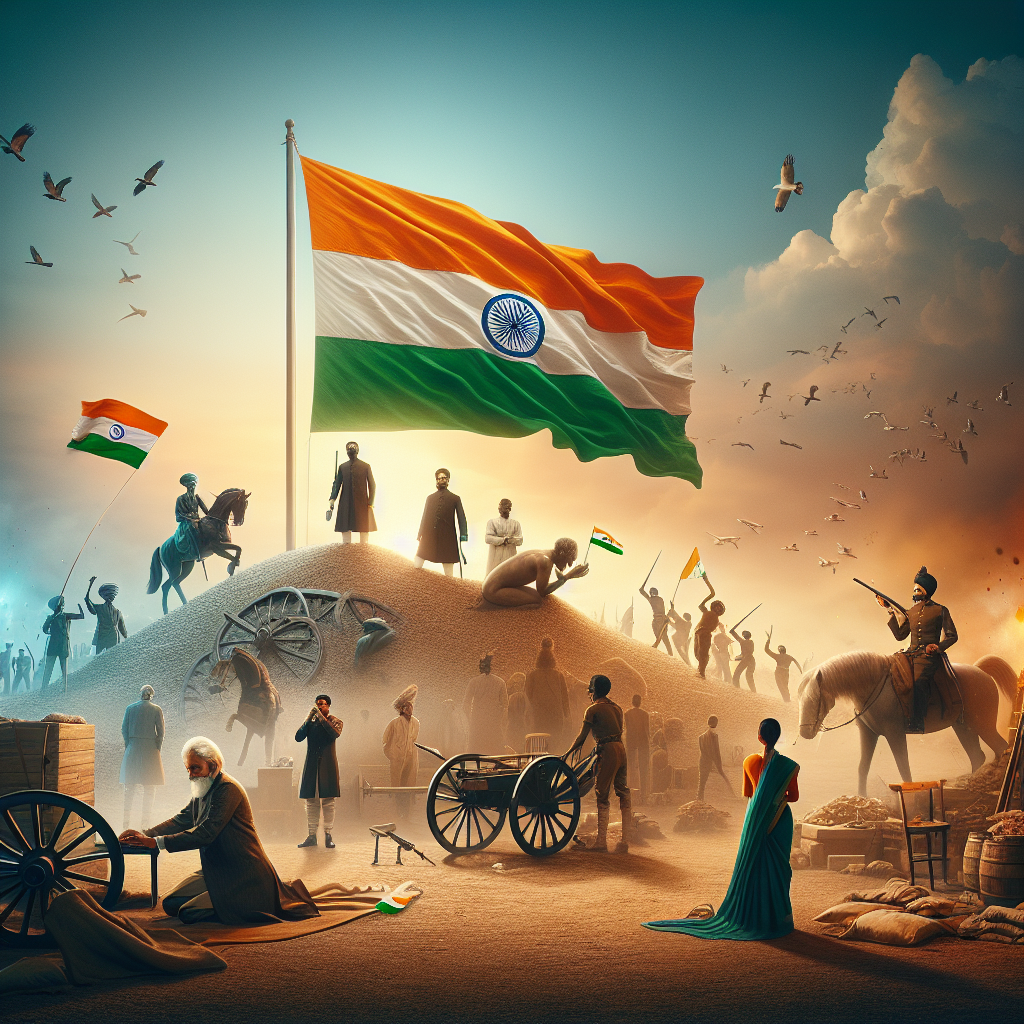
The initial designs of what would eventually become the Indian national flag were deeply symbolic of the country’s diverse and pluralistic society. It was during the early 20th century, amidst a turbulent freedom struggle, that prominent leaders and activists started to envisage a flag that could unite the nation’s people and inspire them to stand together in the fight against colonial rule. Over the years, with each change in design, the essence of India’s perseverance and longing for sovereignty was skillfully woven into the fabric of the flag.

The tricolor flag that we proudly honor today is not only an emblem of India’s journey to freedom but also represents the unity, peace, and progress of modern India. Each color and symbol within the flag holds deep meaning, reminding us of the sacrifices made by our ancestors and the shared values that bind us as a nation.

Indian Flag History From Freedom Struggle to Tricolor Pride

The Evolution of the Indian Flag

The Early Inspirations

In the early 1900s, Indian nationalists began envisioning a national flag that could unite the diverse citizenry against British rule. The first flag of India is believed to have been hoisted in 1906 in Calcutta, known as the Calcutta Flag, which was a tricolor of horizontal stripes of green, yellow, and red. 🌈

  • Each color symbolized a different aspect of India’s struggle for freedom.
  • This flag laid the foundation for future designs, incorporating significant cultural and political symbols.

The Flag of Unity

The next noteworthy flag emerged in 1921, designed by Pingali Venkayya. This flag consisted of two colors, red and green, representing the two major communities, Hindus and Muslims. The inclusion of a white stripe and a charkha (spinning wheel) was suggested by Mahatma Gandhi to symbolize other religions and the country’s self-reliance. 🤝

  • The charkha became a crucial symbol of the Swadeshi movement, endorsing Indian goods and boycotting English products.
  • This design became a benchmark for unity among different religious and ethnic groups in India.

The Birth of the Tricolor

Finally, on July 22, 1947, the current tricolor was adopted in its present form during a Constituent Assembly meeting, just days before India gained independence. 🇮🇳

  • The saffron stands for courage and sacrifice, the white represents truth and peace, and the green signifies faith and chivalry.
  • The Dharma Chakra, a blue wheel in the center, derives from the Lion Capital of Ashoka and symbolizes law and dharma (righteousness).

The Symbolism of the Indian Tricolor

Colors and Their Meaning

Each color on

Republic Day vs Independence Day Key Differences Explained

Every year, two significant national holidays in India evoke a sense of patriotism and pride among its citizens: Republic Day and Independence Day. These days not only commemorate historical events but also serve as moments of unity where people from diverse backgrounds come together to celebrate their country’s past and future. 🌟

Republic Day and Independence Day may seem similar on the surface, as both are marked by ceremonies, parades, and cultural programs. However, each signifies distinctly different aspects of India’s history and governance. Knowing the differences enhances our understanding of India’s national identity and fosters a deeper appreciation of the freedom and democracy cherished by millions of Indians. 🎉

As we delve into the key differences between these national events, we uncover unique facets of each, from their historical roots to how they are celebrated today. Let’s explore how Republic Day and Independence Day individually contribute to the rich tapestry of India’s national pride. 🇮🇳

Topic related image

Historical Significance

Independence Day: A Struggle for Freedom

Independence Day, celebrated on August 15th, marks the day in 1947 when India gained freedom from British colonial rule. After nearly 200 years of foreign domination, this day represents the triumph of the Indian independence movement spearheaded by figures like Mahatma Gandhi, Jawaharlal Nehru, and many others. 🎆

Key events associated with this day include the British Parliament’s enactment of the Indian Independence Act in July 1947 and the partition that led to the creation of Pakistan.

Republic Day: The Dawn of a New Constitution

Republic Day, observed on January 26th, commemorates the day in 1950 when the Constitution of India came into effect, replacing the Government of India Act of 1935 as the governing document. This day marks India’s transition from a British Dominion to a fully sovereign republic. 📜

The date also honors the “Purna Swaraj” declaration of 1930, a symbolic announcement of independence by the Indian National Congress.

Nature of Celebrations

Independence Day Festivities

  • The Prime Minister hoists the national flag at the Red Fort in Delhi, followed by a nationally broadcast speech. 🎤
  • Cultural programs and flag-hoisting ceremonies occur across the country, emphasizing unity and freedom. 🇮🇳
  • The lighting of fireworks and kite flying are common celebratory actions symbolizing the flight of freedom. 🎇

Republic Day Parades

  • A grand parade takes place at Rajpath in New Delhi, showcasing India’s military prowess and diverse cultural heritage. 🚁
  • Local celebrations feature parades, exhibitions, and cultural renditions in various governmental and educational institutions across India.
  • The President of India presides over the events, while a head of state from another nation is invited as the chief guest. 🤝

Symbolic Themes

Independence Day’s Theme of Freedom

The essence of Independence Day lies in freedom and struggle, honoring those who sacrificed for the country’s liberation. It serves as a reminder of the resilience and unity needed to achieve

Top 10 Strongest Countries in the World Ranked

Understanding the global dynamics requires a keen eye on the most powerful countries in the world. These nations not only influence their regional landscapes but also shape global policies and economics. Whether it’s their military prowess, economic might, or cultural influence, these powerhouses play an essential role in global leadership. 🌍💪

The definition of ‘strength’ for a country can vary. Some rank based on GDP, others look at military capabilities, while some consider technology and innovation. However, one thing is certain: the strongest countries leave a significant impact on the world stage. Let’s dive into a ranked list to uncover who rules the roost internationally.

In this listicle, we’re focusing on a combination of military, economic, and diplomatic influences to bring you the top ten strongest countries in the world. Prepare to be intrigued as we rank them for you.

Topic related image

Top 10 List

  1. United States
  2. China
  3. Russia
  4. Germany
  5. United Kingdom
  6. France
  7. Japan
  8. India
  9. South Korea
  10. Saudi Arabia

Quick Notes

  • United States: Leading in military and economic power, the US remains a global superpower.
  • China: Fast-growing economy and expanding military influence elevate China on the world stage.
  • Russia: Known for its military capabilities and energy resources.
  • Germany: The economic engine of Europe with strong global influence.
  • United Kingdom: Historically powerful with a strong diplomatic presence worldwide.
  • France: A nuclear power with cultural and diplomatic influence.
  • Japan: A technological leader with economic stability.
  • India: Growing economic power with increasing geopolitical influence.
  • South Korea: Technological giant with a robust economy.
  • Saudi Arabia: Rich in oil reserves, plays a key role in global energy markets.

These countries are not just dominant because of their military or economic prowess. Their influence is felt across various spheres, from technological advancements to diplomatic negotiations. Each stands out in its unique way, contributing to a dynamic and multifaceted global environment. 🚀🌐

As global challenges arise, these nations are often at the forefront, providing solutions, resources, or policy shifts to guide international discourse. Watching their interactions is like observing a strategic chess game, where each move and counter-move can have worldwide implications. 🌐🕊️

Top 10 Gujarati Dishes Perfect for Lunch and Dinner

Embarking on a culinary journey through Gujarat is like opening a treasure chest of vibrant flavors, aromatic spices, and rich traditions. This western Indian state, often celebrated for its cultural tapestry, offers a diverse array of dishes that tantalize taste buds and leave a lasting impression. Whether you’re a foodie seeking new adventures or someone looking to explore vegetarian delicacies, Gujarati cuisine promises a delightful experience. The true beauty of these dishes lies in their simplicity and the love with which they are prepared, turning every meal into a heartwarming feast.

As the afternoon sun dips towards the horizon or the evening stars begin to twinkle, a traditional Gujarati meal offers comfort like no other. Unlike some cuisines, where meat and seafood often take center stage, Gujarati cuisine celebrates the richness of vegetables, lentils, and legumes. The artful use of spices not only enhances flavors but also brings out the nutritional benefits of every ingredient, embodying the true essence of mindful eating. Hungry yet? Let’s dive into the top 10 Gujarati dishes that are perfect for both lunch and dinner. 🍛

Traditional Staples 🌾

1. Dhokla

Dhokla, a fermented steamed cake made from rice and chickpea batter, is a staple in Gujarati households. Often enjoyed as a snack or breakfast, its light and fluffy texture makes it ideal for main meals too. Drizzle with mustard seeds and served with mint chutney, it’s a must-try delicacy.

2. Thepla

Thepla is a type of Indian flatbread infused with fenugreek leaves (methi) and a blend of spices. It’s not only delicious but also incredibly versatile. Perfect for lunchboxes, Thepla is often accompanied by yogurt or pickles. Its robust flavors make it a hit, even among those new to Gujarati cuisine.

3. Khichdi

Considered a comfort food, Khichdi is a one-pot dish made with rice and lentils. Nutritious and easy to digest, it’s often tempered with ghee and cumin seeds. Pair it with a dollop of yogurt or curries for a wholesome, satisfying meal.

Rich Curries and Legumes 🍲

4. Undhiyu

Undhiyu is a winter special in Gujarat, featuring a rich mix of seasonal vegetables and spices, traditionally cooked in an earthen pot. This hearty dish, with its aromatic blend of flavors and textures, is a beloved component of festive occasions.

5. Dal Dhokli

A comforting curry, Dal Dhokli involves simmering whole wheat flour dumplings in a spicy, sweet, and tangy lentil soup. The melding of flavors from the spiced lentils and dough creates a warm, satisfying meal perfect for any time of day.

6. Sev Tameta Nu Shaak

This unique dish combines the sweetness of ripe tomatoes with the crunchiness of gram flour sev, seasoned with traditional spices. It’s a deliciously unexpected combination that pairs well with hot chapatis or fragrant basmati rice.

Delectable Snacks and Side Dishes 🍽️

7. Khandvi

Delicate and silky, Khandvi is made from gram flour and yogurt, rolled into bite-sized pieces, and seasoned with mustard and sesame seeds. A classic in Gujarati cuisine, it’s both a visual and a gastronomic treat, whether served as an appetizer or a side dish.

8. Muthia

Muthia, a steamed dumpling made from grated vegetables and spices, makes for a healthy and flavorful dish. Often garnished with curry leaves and mustard seeds, it’s typically enjoyed as a tea-time snack or alongside meals.

9. Patra

This dish is made using colocasia leaves, smeared with a spicy besan paste, and rolled into spirals. Once steamed and sliced, Patra is then garnished with sesame seeds and fresh coconut, making it a delightful addition to any meal.

Sweet Endings 🍬

10. Shrikhand

Conclude your meal with Shrikhand, a creamy, sweet dessert made from strained yogurt and flavored with saffron, cardamom, and nuts. It’s a refreshing treat that perfectly balances the spices of the main course, ending your meal on a joyous note.

Gujarati cuisine is a beautiful celebration of flavors, bringing together sweet, spicy, and tangy tastes that create

Master Uno Like a Pro How to Play and Win Every Game

Who hasn’t enjoyed an exciting game of Uno on family game night? Known for its vibrant colors and simple rules, Uno is a household staple that can transform an ordinary evening into a rollercoaster of fun. But like all card games, there’s a strategic edge waiting to be discovered. Whether you’re a casual player or someone deeply passionate about cards, mastering Uno can provide just as much thrill as any poker game. Today, we’re diving into the strategies that could help you become the ace in Uno.

From learning the psychology of play to understanding card tactics, becoming an Uno pro is well within your reach. So, are you ready to shift from occasional wins to consistent victor? Buckle up, because every card you draw brings a lesson, and every play you make should form a part of your winning arsenal.

Understanding the Basics 🃏

The Deck and Its Components

The Uno deck consists of 108 cards, each with its unique function. You need to know what each card does to use them to your advantage. There are:

  • 76 number cards – these are straightforward but build the foundation of your strategy.
  • 24 action cards – draw two, skip, and reverse cards that can turn the tables in an instant!
  • 8 wild cards – including the game-changing ‘wild draw four’ cards, which unleash your strategic prowess.

Core Rules to Never Forget

The objective of playing all the cards before your opponents is fundamentally simple, but it’s easy to get caught up in the excitement. Always remember:

  • Match the top card in the discard pile with either a number or a color card.
  • If you lack a playable card, drawing from the deck is your only option.
  • Once you’re down to one card, you must declare “Uno!” or else face the consequence of drawing two more cards.

Implementing Winning Strategies 🏆

Evolving Your Card Counting Skill

Much like in poker, being aware of the cards played and left in the game provides a crucial edge. Pay attention to:

  • The number cards already discarded to gauge the likelihood of what remains.
  • The action cards used or seen, so you can anticipate when your opponent has the upper hand.

Pace Your Card Plays

Strategically pacing your plays will keep your competitors on their toes. Consider:

  • Playing high-value action cards (like ‘draw four’) when your opponent is close to winning.
  • Using ‘skip’ and ‘reverse’ to buy time and thwart impending threats.

Mastery Over Wild Cards

Wild cards can be both your best ally and your opponent’s worst nightmare. Use these tips:

  • Use ‘wild draw four’ when backed into a corner to change the game’s momentum.
  • Save your wild cards for tactical advantage, such as disrupting opposing strategies.

The Psychology of Uno 🧠

Reading Opponent Behavior

Understanding how your opponents think can tip the scale in your favor. Keep an eye on:

  • Body language – are they visibly tense holding a specific card, indicating an impending win?
  • Playing patterns – take note of how aggressively they use action cards early in the game.

Bluffing and Deception

Much like in poker, a well-timed bluff can make a world of difference in Uno. Experiment with:

  • Intentionally drawing cards as a ruse to make opponents think you’re struggling.
  • Feigning an emotional reaction to lure competitors into playing their strategy too soon.

Maintain the Right Mindset

Lastly, your mental game plays a crucial role in how the cards fall throughout the night. Remember:

  • Staying calm helps you make more logical decisions.
  • Enjoying the game reminds you that winning is more rewarding when you focus on fun.

By weaving these strategies and psychological insights into your gameplay, you are well on your way to becoming an Uno master. While luck is always a factor, combining a tactical approach

India’s Top 10 YouTubers

INTRODUCTION

With the explosion of digital content, YouTube has become a powerhouse platform in India, home to millions of creators who influence, entertain, and educate viewers daily 🎥. From tech-savvy geeks to comedy kings and queens, India is teeming with talented YouTubers who have captivated audiences worldwide🌍. If you’re looking to freshen up your subscription list, you’re in the right place! Here are India’s top 10 YouTubers you need to follow right now for diverse, engaging content that caters to all tastes.

ENTERTAINMENT MAVERICKS

BHUWAN BAM

Bhuwan Bam, known for his channel BB Ki Vines, is a comedic genius. His unique humor and the eccentric characters he plays have amassed millions of followers 📈. Dubbed as India’s comedy superstar, Bhuwan’s skits revolve around everyday life, skillfully delivering laughter with a dose of relatability.

Why Follow?

  • Sharp wit and relatable content 🎭
  • Amazing character versatility 🤹‍♂️

AMIT BHADANA

Amit Bhadana, with his storytelling prowess and humorous observations, has won over legions of fans. His sketches often embody the nuances of local cultures and dialects, making his content both authentic and entertaining.

Key Highlights:

  • Rich cultural context 🕌
  • High relatability quotient 🤝

TECH AND EDUCATION GURUS

TECHNICAL GURUJI

Gaurav Chaudhary, the face behind Technical Guruji, is a leading figure in tech reviews and insights. His concise and honest evaluations of gadgets and technology trends keep his subscribers tech-savvy and up to date 🔍.

Why Subscribe?

  • In-depth gadget reviews 📱
  • Reliable tech advice 🤖

UNACADEMY

Unacademy aims to revolutionize education in India by bringing expert knowledge to your screen. With a plethora of subjects and courses, it is an invaluable resource for learners striving to excel academically 📚.

Features:

  • Wide range of educational content 🧑‍🏫
  • Expert educator sessions 🎓

FOODIES’ PARADISE

VILLAGE COOKING CHANNEL

The Village Cooking Channel showcases authentic Indian cuisine with a rustic charm 🍛. Each video is a culinary journey through India’s diverse palate, where traditional dishes are prepared amidst natural settings.

Reasons to Watch:

  • Authentic cultural experiences 🌾
  • Delicious and easy-to-follow recipes 🍲

CHEF KUNAL KAPUR

Chef Kunal Kapur, a celebrated culinary artist, offers a modern twist to traditional dishes 🥘. His expertise and creativity will inspire both novice and seasoned cooks to experiment in the kitchen.

Why Follow?

  • Gourmet cooking tips 🍴
  • Innovative recipes 🌟

CONCLUSION

From laughter to learning, India’s YouTubers are embracing diverse content to enrich our lives. Following these creators means opening up to a world of creativity, education, and cultural richness 🌟. So why wait? Hit that subscribe button and dive into the fascinating world of India’s YouTube talent pool today. Happy watching! 📺❤️

New Income Tax Slabs for FY 2025-26: A Comprehensive Guide

As the financial year 2025-26 approaches, taxpayers in India are gearing up to navigate the revised income tax slabs introduced in the Union Budget 2025. The new tax structure aims to simplify the tax system and provide relief to individuals across various income brackets. In this blog, we will break down the key changes, benefits, and implications of the new income tax slabs.

What Are the New Income Tax Slabs?

The Union Finance Minister, Nirmala Sitharaman, announced significant changes to the income tax slabs during the presentation of the Union Budget 2025. The new tax slabs, effective from April 1, 2025, are as follows:
 
 
New Income Tax Slabs for FY 2025-26

Key Highlights of the New Tax Regime:


1. Increased Basic Exemption Limit

One of the most notable changes is the increase in the basic exemption limit from Rs. 3 lakh to Rs. 4 lakh. This adjustment means that individuals earning up to Rs. 4 lakh will not be liable to pay any income tax, providing significant relief to lower-income earners.
 

2. Enhanced Tax Rebate Under Section 87A

The tax rebate under Section 87A has been raised to Rs. 60,000, ensuring that individuals with a net taxable income of up to Rs. 12 lakh pay no income tax. This marks a substantial increase from the previous rebate limit of Rs. 25,000, which applied to incomes up to Rs. 7 lakh.
 

3. Simplified Compliance

The new tax regime continues to be the default option for taxpayers, simplifying compliance. Individuals must actively opt for the old regime if they wish to claim deductions and exemptions available under it. This shift aims to encourage more taxpayers to transition to the new regime, which offers lower tax rates.

4. Marginal Relief for Higher Incomes

For individuals whose income slightly exceeds Rs. 12 lakh, the government has introduced a marginal relief provision. This ensures that the additional tax payable does not exceed the excess income over Rs. 12 lakh, preventing a sharp increase in tax liability.
 

Implications for Taxpayers

The revised income tax slabs are expected to significantly reduce the tax burden for many individuals. For instance, a taxpayer earning Rs. 12 lakh will now pay no tax, compared to the previous regime where they would have faced a substantial tax liability. Similarly, those earning Rs. 15 lakh will see a reduction in their tax payments, allowing for increased disposable income.
 

Conclusion

The new income tax slabs for FY 2025-26 represent a progressive step towards a more equitable tax system in India. By increasing the basic exemption limit and enhancing tax rebates, the government aims to provide relief to a broader section of taxpayers. As individuals prepare for the upcoming financial year, understanding these changes will be crucial for effective tax planning and compliance.
 
 
For more detailed information and personalized advice, consider consulting a tax professional or financial advisor. Stay informed and make the most of the new tax regime!